Roof-plane documentation for wind-driven rain, broken shingle seals, branch impact, displaced flashing, gutter overflow, and dry-in decisions.
Hail chasing is the wrong model for Beaverton. Westside storm calls usually begin with
wind-driven rain, a branch strike, loosened shingles, or a gutter that spills water into the
roof edge. A small opening matters because the roof may remain wet through successive rain
bands. If a limb has landed on the house, shingles are on the ground, or water is reaching a
room, call (971) 298-7833 and describe the
safest visible facts.
Wind Damage Does Not Need a Missing Roof
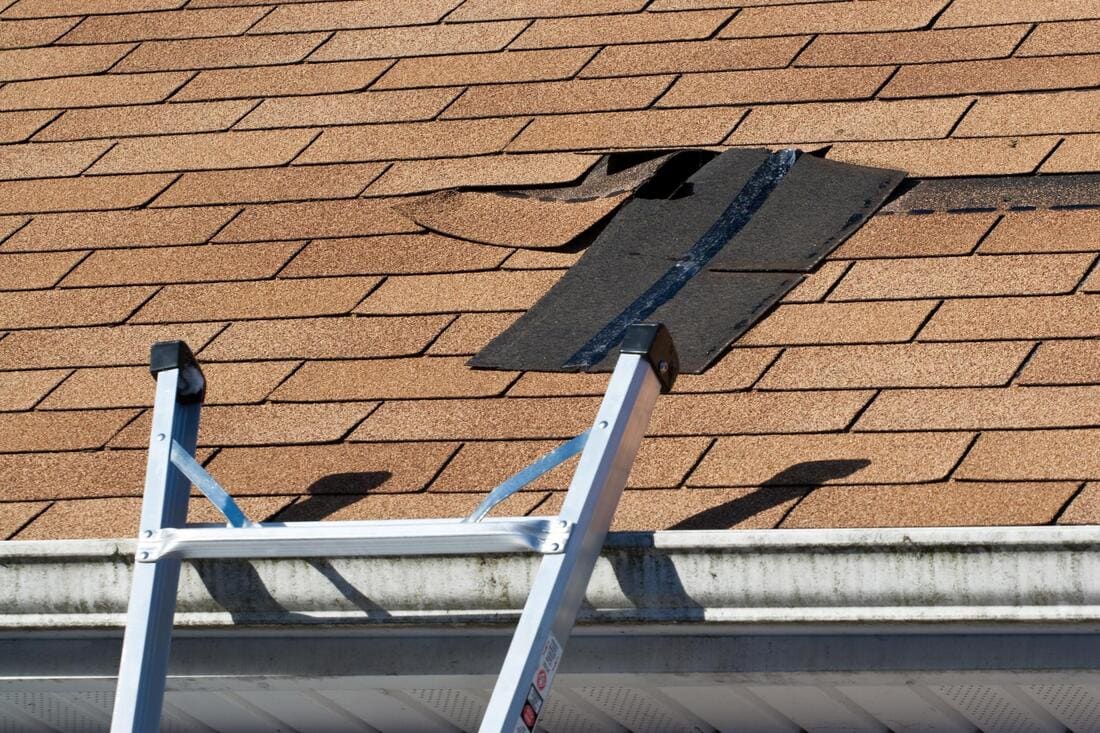
Wind can break a shingle's adhesive seal without carrying the shingle away. The tab settles
back down and looks normal from the driveway, yet it can flutter or admit water in the next
storm. Ridge caps, pipe jacks, vent covers, skylight flashing, and chimney metal can move in
the same event. A close inspection checks the exposed slope and the sheltered slope because
pressure can affect them differently.
Wind-driven rain also tests details that perform well in calm weather. Water arrives under a
shingle edge or against the uphill side of flashing instead of simply draining downward.
Interior timing helps narrow the source: an immediate drip, a delayed stain, or leakage only
from one wind direction each points the inspection toward a different set of joints.
Branch Impact Extends Beyond the Strike Mark
A limb can puncture the deck, but it can also scrape granules, crack nearby shingles, bend a
gutter, loosen fasteners, or load a roof section without leaving a clean hole. The inspection
should follow the impact path downslope and check the attic below when access is available.
If the opening is exposed, emergency roof protection
takes priority over a complete permanent scope.
A Useful Photo Record Shows Context
Close-ups show a split, tear, or flashing gap. Wider images show which slope, penetration,
or valley contains it. A complete record may include roof planes, ridge and eave edges,
vents, gutters, siding transitions, fallen material, and interior water marks. That context
lets you compare the photos with the itemized scope instead of accepting a vague storm label.
Temporary Protection and Permanent Repair Are Separate
A tarp, board-up, or temporary flashing detail is meant to reduce new water entry until
safe, dry access is possible. It does not replace torn shingles, rebuild flashing, or repair
broken sheathing. The dry-in scope should state the protected area and its limitations. The
later quote should name the damaged material, deck assumptions, cleanup, and the weather
window required for permanent work.
Storm documentation connects each close-up to a roof plane, edge, or penetration.
Insurance Decisions Stay With the Carrier
Insurance carriers decide coverage. The contractor can photograph visible wind or storm damage and prepare an itemized scope, but no claim result or financial incentive is promised. Documentation can support a clear conversation, but it cannot
decide policy coverage. A contractor may prepare an itemized scope or attend an inspection
when useful. Avoid promises of approval, special incentives, or a roof recommendation that
changes merely because a claim was opened.
Repair the Documented Damage, Then Check the System
One lifted field may support a localized shingle repair. A branch puncture can require a
deck patch and new underlayment. Multiple weak planes on a brittle, moss-compromised roof may
justify a replacement comparison. The
photo-inspection process should make those options visible,
while the cost guide supplies planning ranges before an
on-site quote fixes the price.
Exposure changes across a single property. One plane may face open wind while the opposite
side stays shaded, mossy, and slow to dry. The storm visit should account for both. What you
need afterward is a safe roof, a photo record tied to exact locations, and a repair proposal
that stands on the physical damage regardless of the insurance outcome.
Frequently Asked Questions
What should I photograph after wind damages my roof?
From the ground or indoors, photograph fallen shingles, branches, ceiling stains, wet belongings, gutter damage, and when the water appeared. Do not climb for close-ups. The contractor can safely document roof planes, flashing, vents, and impact points during the inspection.
How can wind-driven rain leak through intact-looking shingles?
A shingle can remain in place while its adhesive seal breaks or its edge lifts slightly. Wind then pushes water beneath the course. Small gaps at ridge caps, vents, skylights, and wall flashing can fail under the same sideways pressure.
Does storm documentation guarantee insurance coverage?
No. A contractor can record visible conditions and prepare an itemized repair scope, but the carrier controls coverage. Keep the roof diagnosis separate from the claim decision and reject any promise of a guaranteed result.
When does a branch strike require an emergency dry-in?
Urgent protection is appropriate when the branch opens shingles or decking, dislodges flashing, leaves active water inside, or creates an unsafe loose section. A tarp or board-up is temporary; permanent work follows when the roof can be inspected safely.